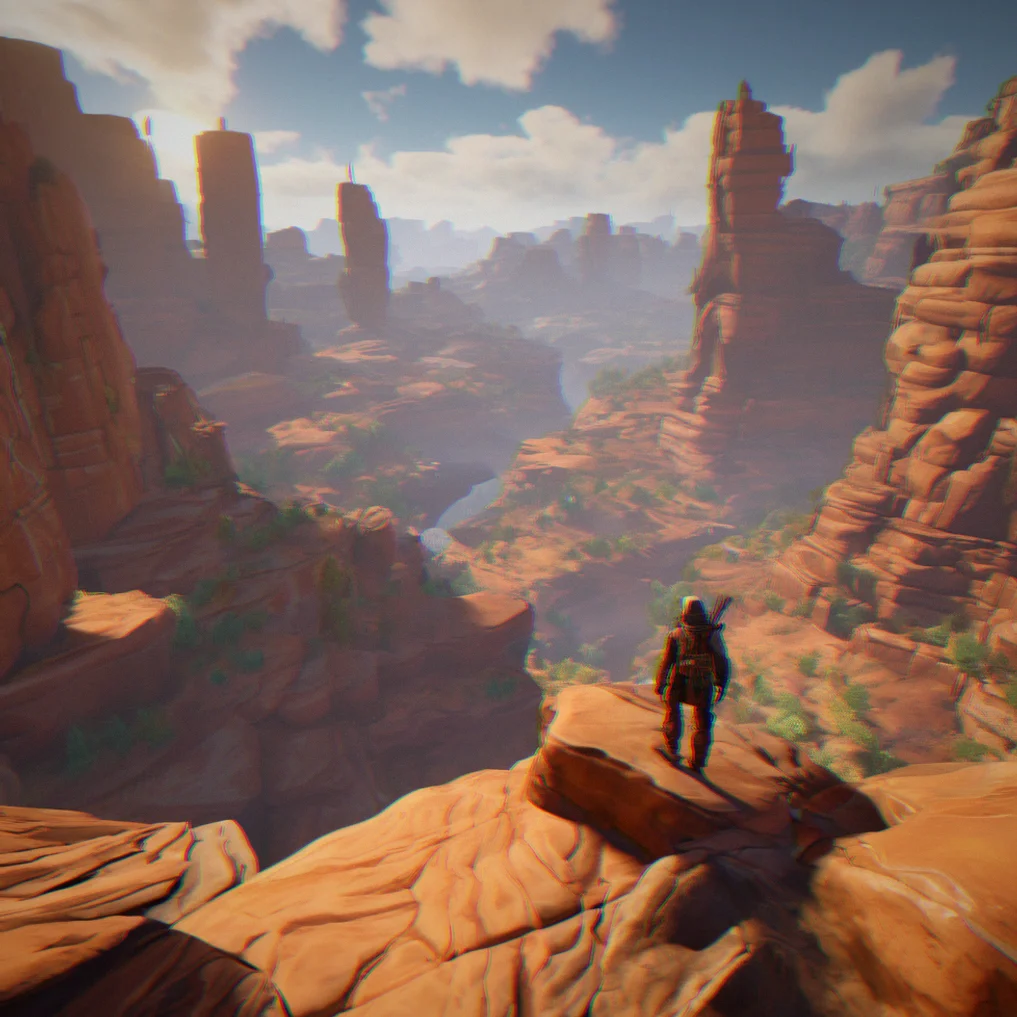
Terrain builds itself as you move forward. No loading screens. Just walking and watching new landscape appear around you.
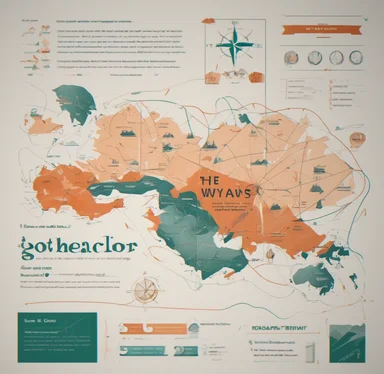
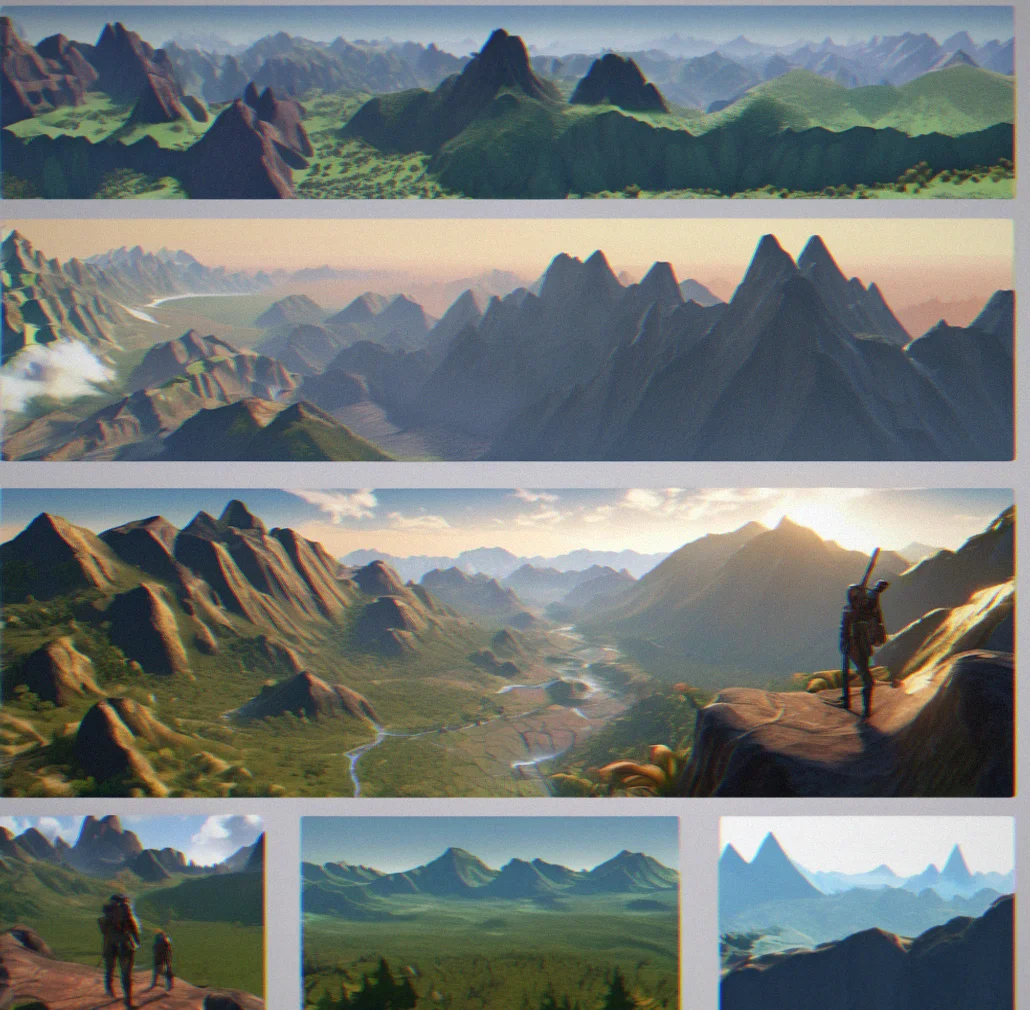
It's procedural cartography at work. Each time you play, the terrain is completely new. The alglrithm generates fresh geography depending on your path, the weather, where you started, the time of day. Head north instead of west and suddenly the ravines are in a totally different spot. Come back after the sandstorm clears and you might find a canyon that was blocked off before.
Everything you find goes into your atlas, which stays with you. You can compare maps with other players and see how wildly different things look. Five people exploring the same region end up with five completely different maps because each one was generated along their own path under their own conditions. All of them are right.
Weather actually changes what you can reach. Thermal vents open up once the acid storm passes. Coastal routes flood when the rains Come through. It's not just harder or easier—it's the world Itself shifting.
Each biome looks different depending on when you get there. Watch the terrain shift as you walk through it, see how weather changes what you can actually reach and build your atlas one discovery at a time.
Terrain builds itself as you move forward. No loading screens. Just walking and watching new landscape appear around you.
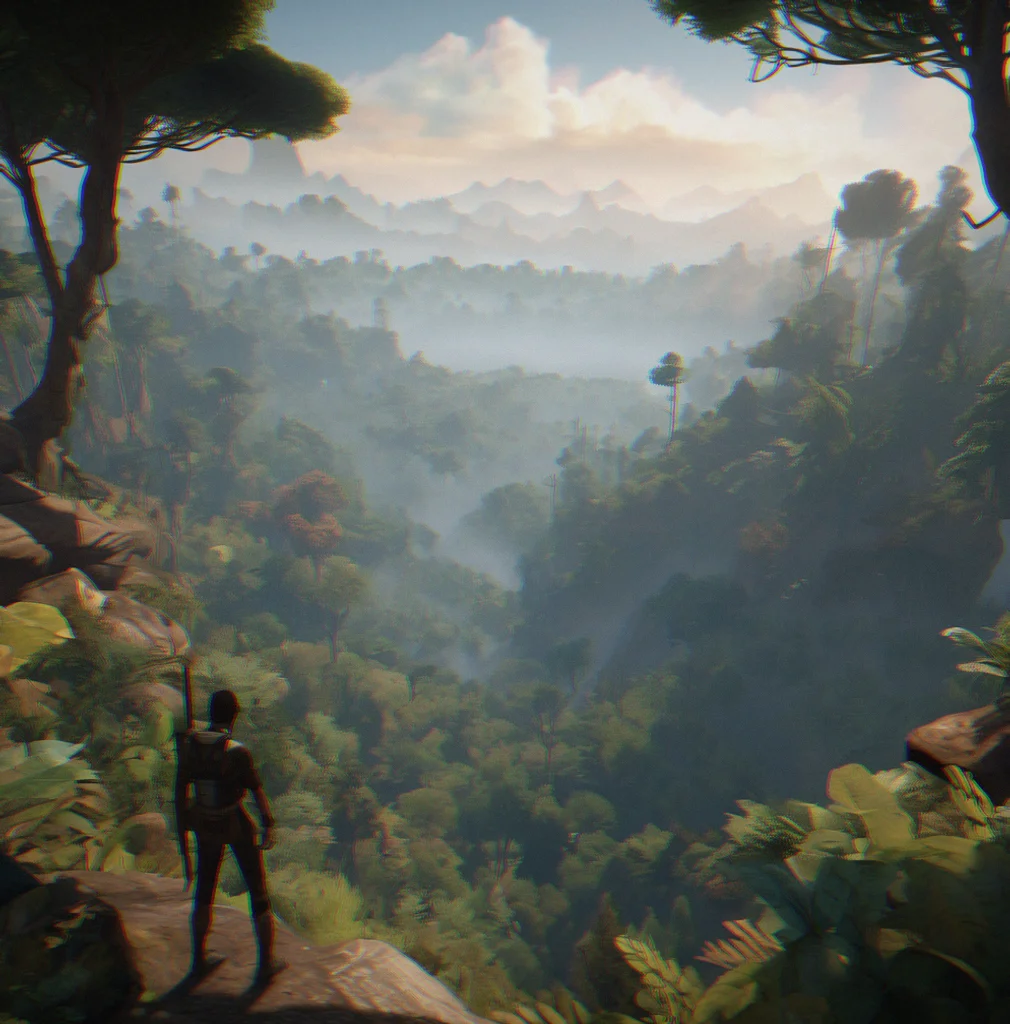
Weather blocks you from going certain places. Fog shows up and the coastline disappears. Come back when it lifts and suddenly you can reach areas that were closed off before.
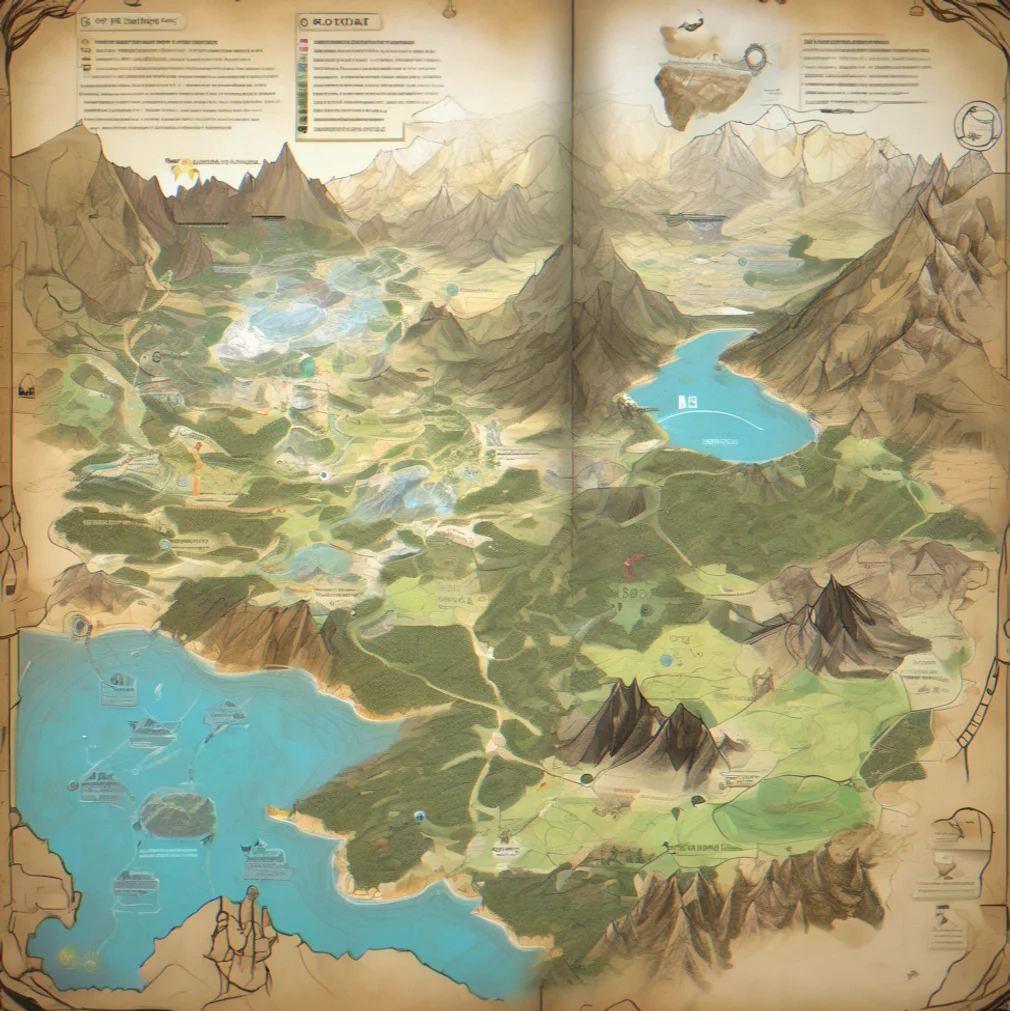
Everything goes into your atlas automatically. Landmarks appear as you discover them. You can mark things you found, add measurements, or just let it stay as a plain topographic map.
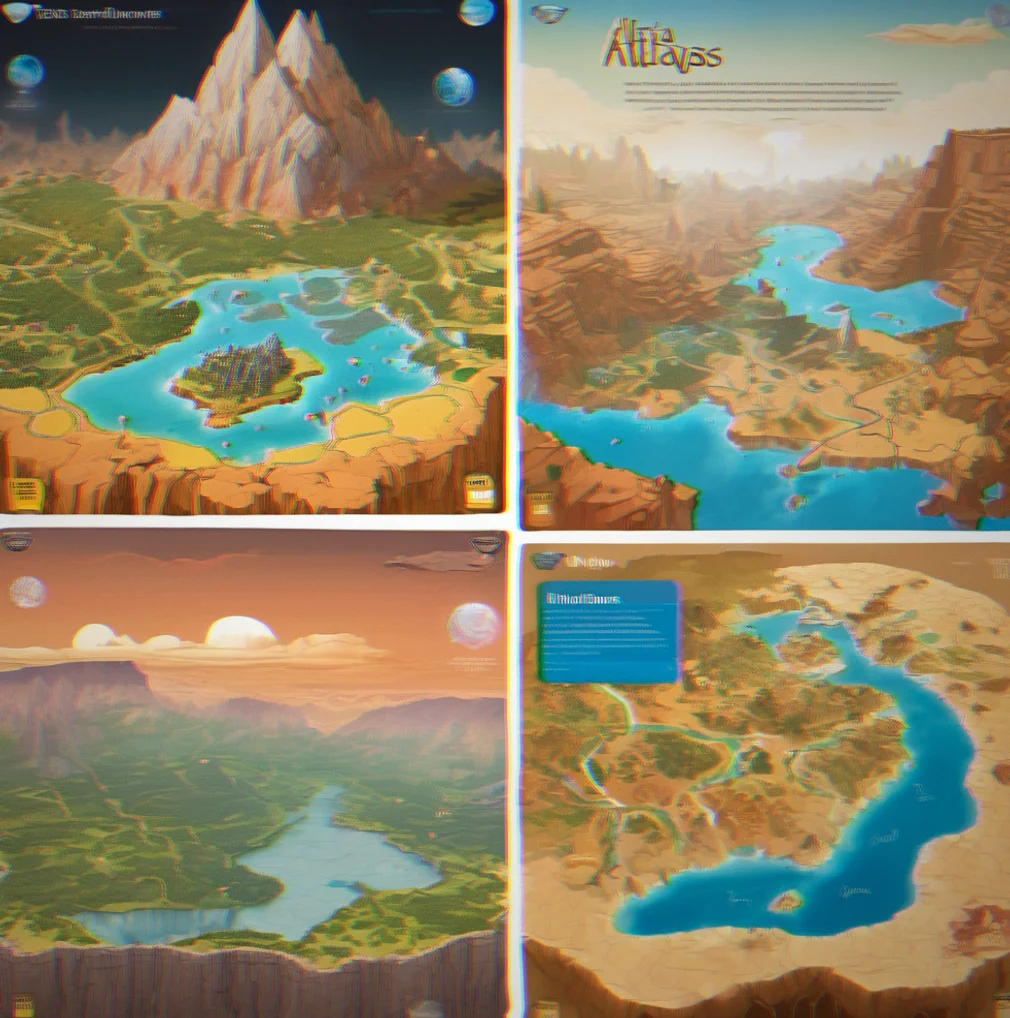
Two people start in the same biome. Their maps look nothing alike. Different paths meant different worlds. That's how procedural generation is supposed to work.
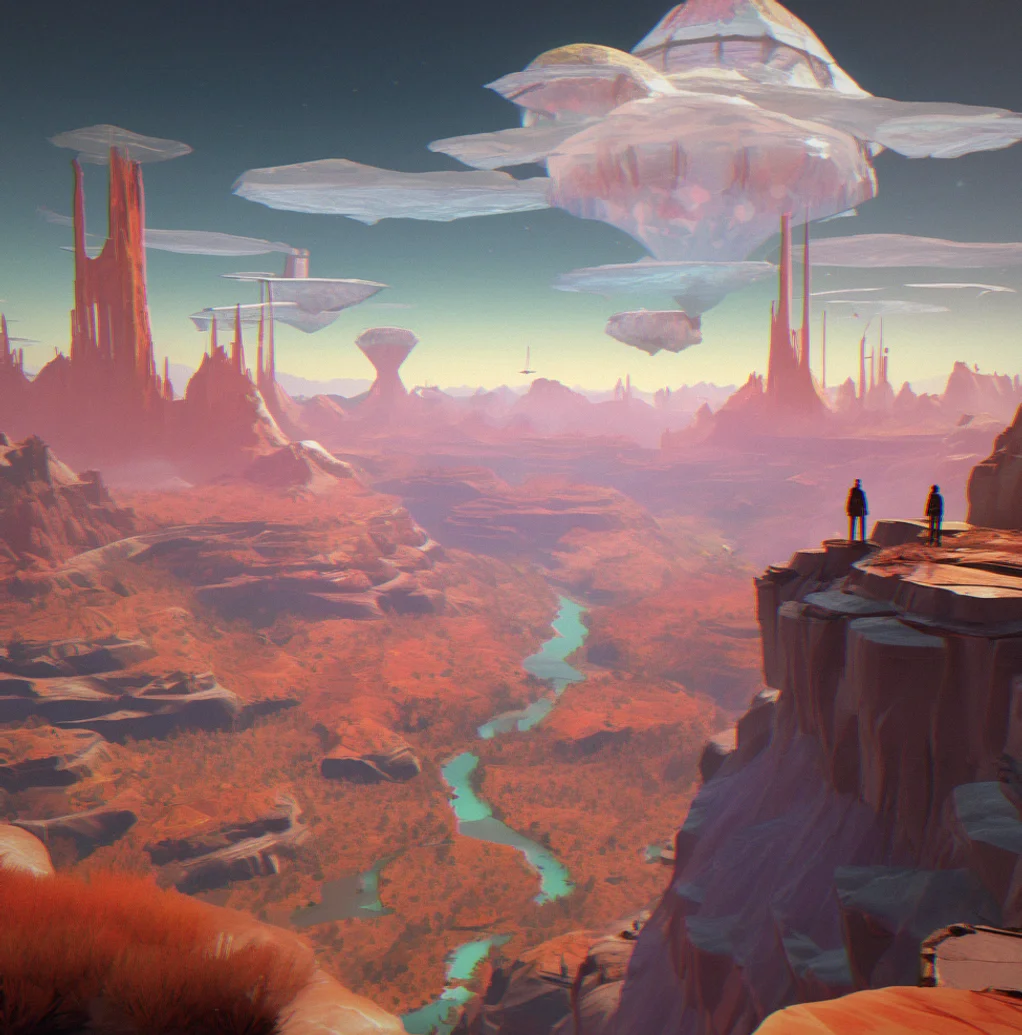
You found a ridge. Now you're standing on it looking out at terrain nobody else has ever seen. Atlas updates. The biome boundaries become clear. This is the whole experience.
Six core systems that make exploration feel like discovery instead of following a map someone else already drew.
The biomes build themselves in real-time based on where you're going, how you got there, and what the weather's doing. Walk through the same region twice under different conditions and the geography shifts. Since no two players take the same path, no two players end up with the same map.
Your atlas fills itself in as you move. No menus to dig through, no quest markers cluttering things up. Just walking forward while the map records what you encounter. Landmarks show up as coordinates, terrain contours shift as you climb or descend, and biome edges draw themselves.
A sandstorm can seal off desert passages. Fog rolls in and hides the coastline. Seasonal floods make lowlands impossible to cross. Weather doesn't just look pretty—it actually controls which discoveries you can reach. Come back later and that same biome might open up completely different routes.
Everything you discover sticks around in your world record. Spend 50 hours exploring and you've built a real map of the territory you've seen—biomes you've been back to multiple times, landmarks you've revisited, routes you've optimized. It never resets. It just keeps growing.
Share what you've found. Look at what other players discovered in the same region. Their version looks nothing like yours because they took a different approach, hit different weather, found passages you never stumbled on, or missed landmarks you marked. Same biome, but five completely different maps.
That ridge you found. That thermal geyser. That crystalline formation hidden in a valley. Nobody else's game generates those exact things at those exact coordinates in that exact arrangement. You found something unique and it lives in your atlas forever.
Terrain renderrs as you move. Weather shifts. Your atlas fills. These five moments show the actual mechanics at work—no cutscenes, just the game running.
Most exploration games hand you a finished world. You walk the intended routes. Find the marked spots. MotionAtlas generates biomes in real-time based on your movement, the weather and what time it is. So every trip produces genuinely different geography—even if you're in the same named region. What you're seeing here isn't a highlight reel. It's cartography happening in front of you: terrain forming, weather blocking certain paths, atlases diverging, discoveries stacking up. Each frame shows one piece of how procedural generation works alongside real-time mapping.
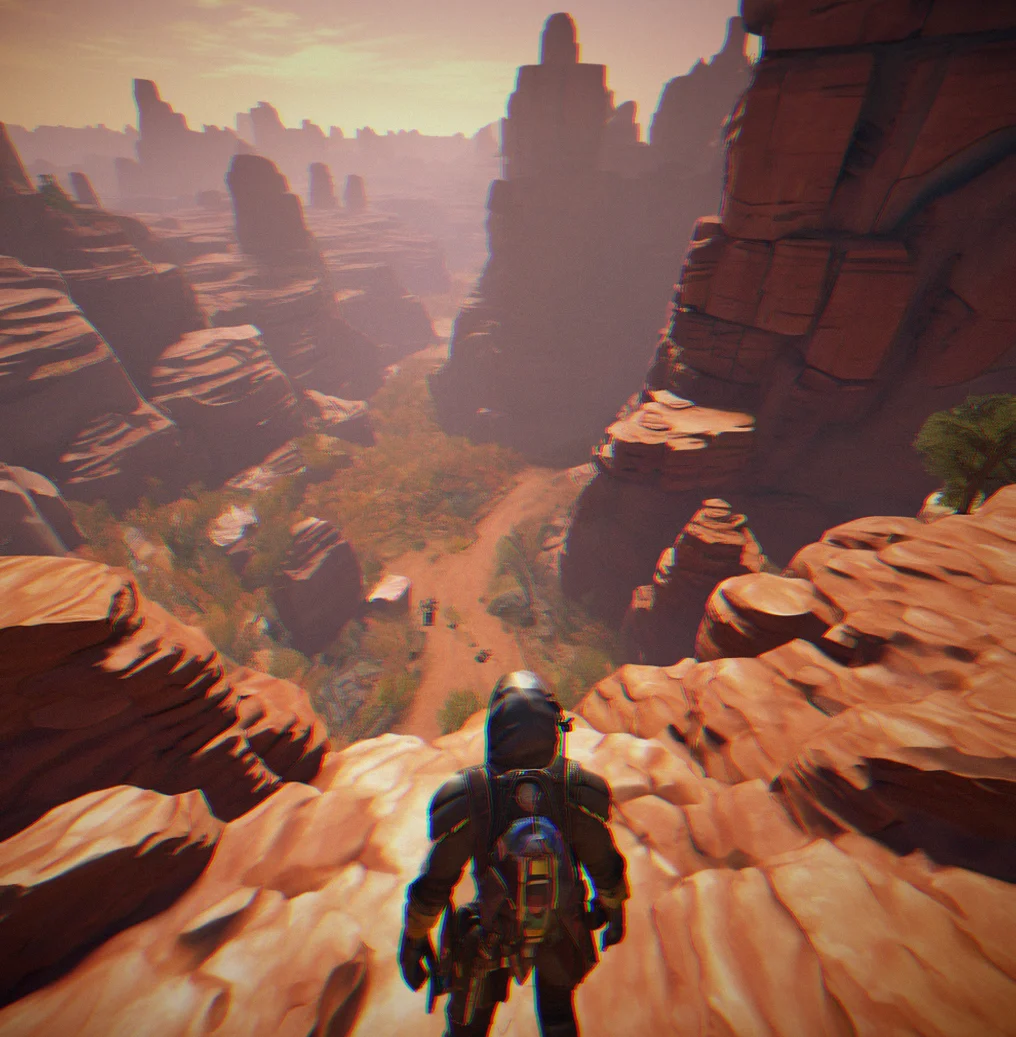
Terrain appears as you move. No loading. Just forward motion and new ground taking shape underneath.
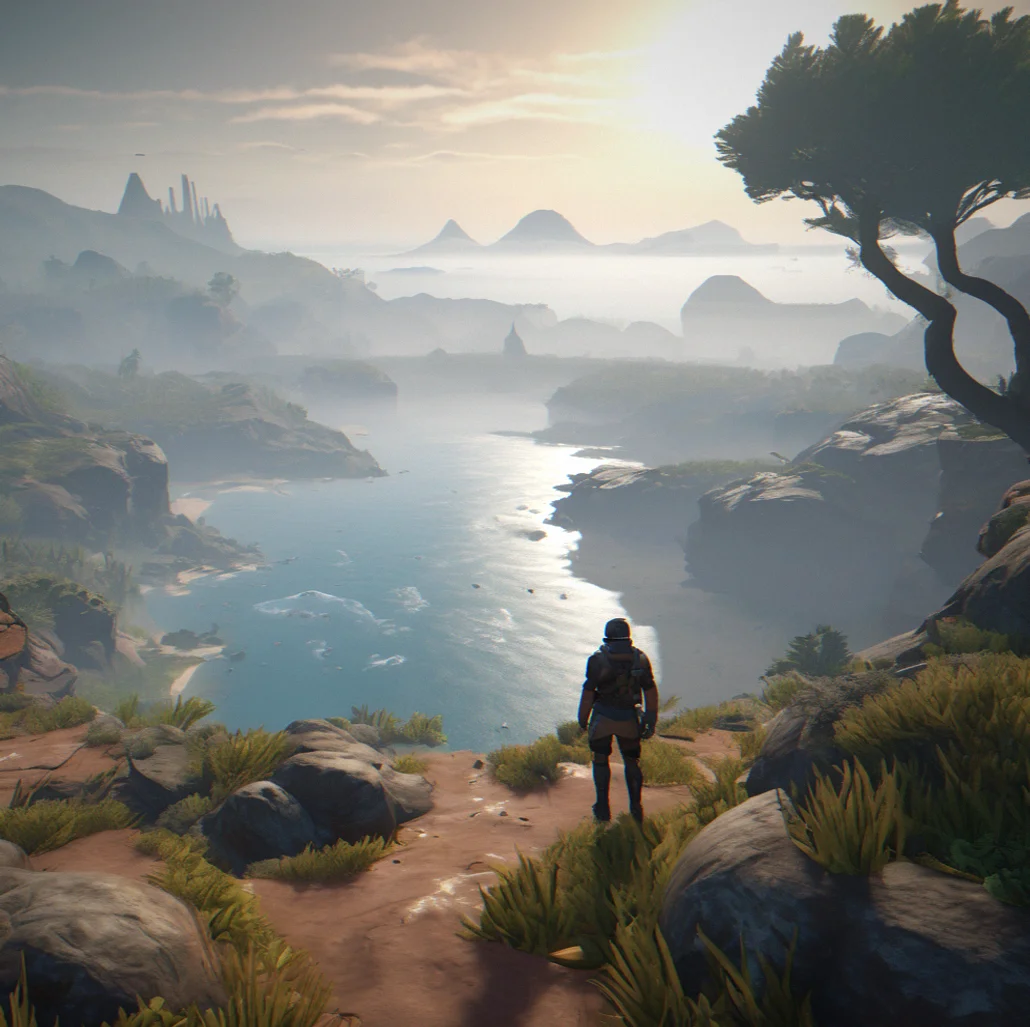
Weather decides what you can reach. Fog. Rain. Sandstorms. Wait for cnoditions to change and locked areas open up.
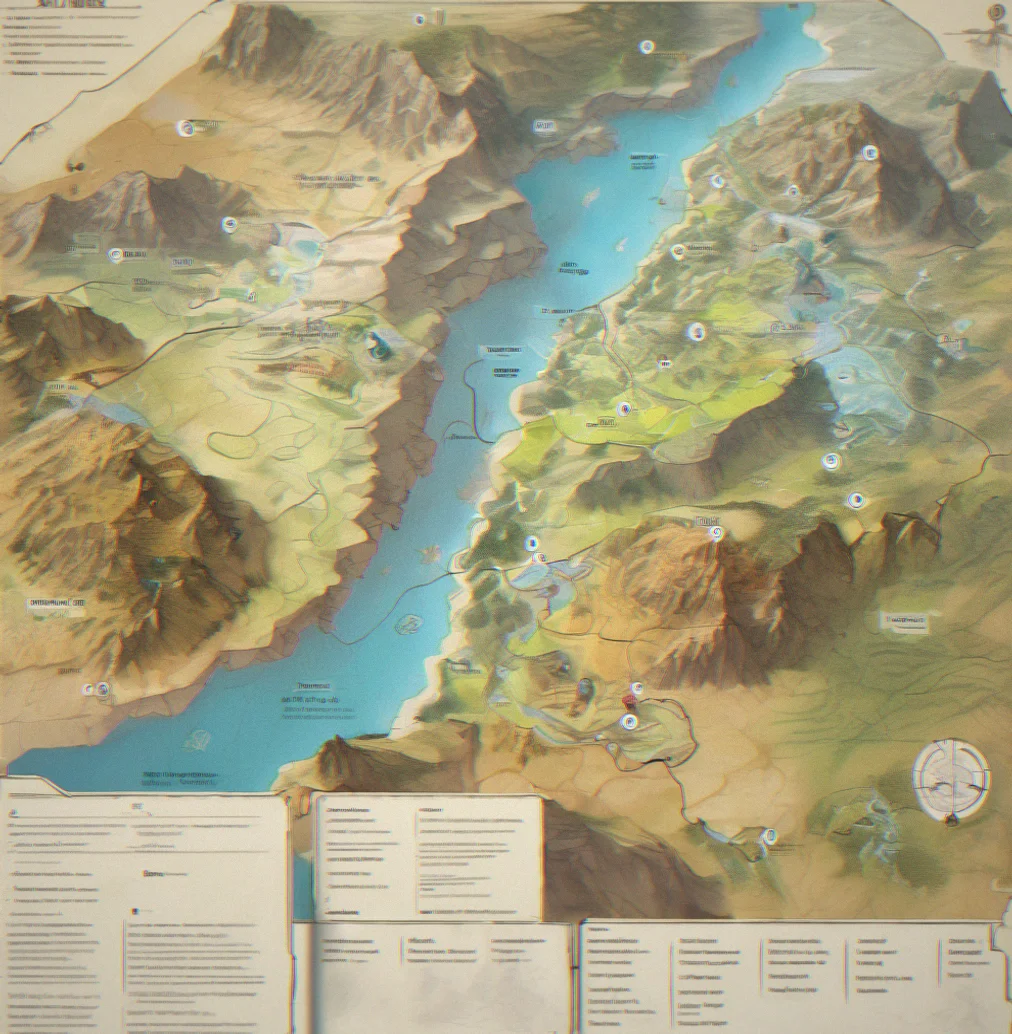
Your atlas logs everything on its own. Landmarks. Routes. Where one biome ends and another starts. Grows with each expedition.
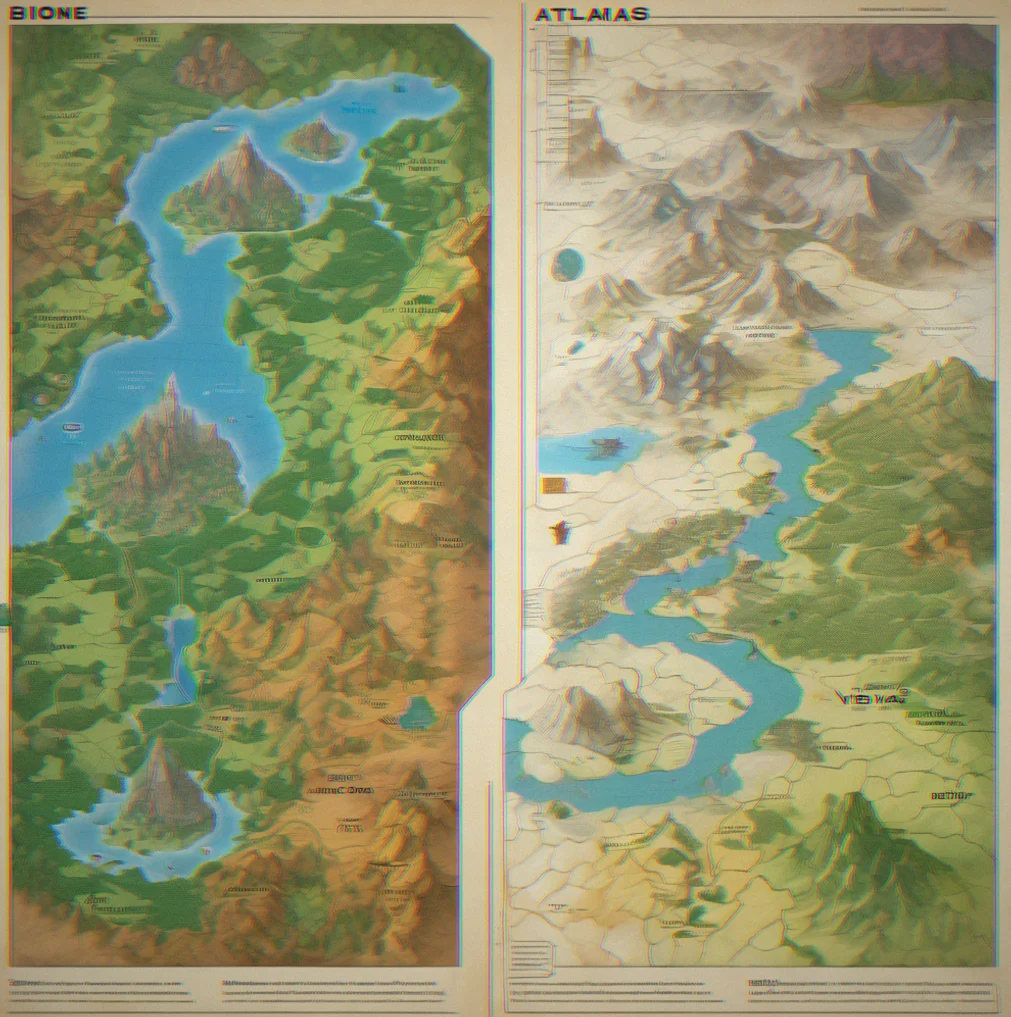
Same starting point, two different worlds. One player found a thermal geyser. The other stumbled into a crystalline cave system. Both are right.
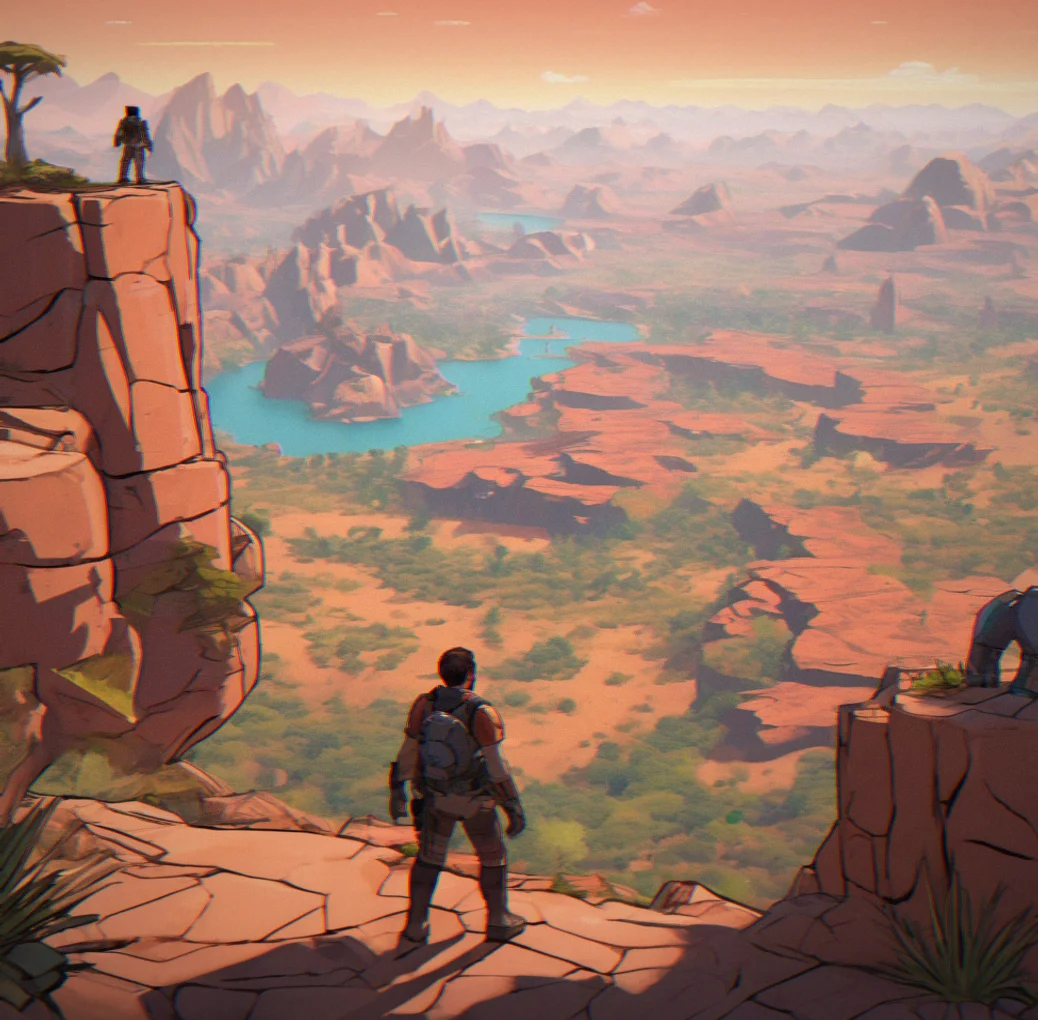
You're standing at something you found. Looking out at ground nobody else has walked. That discovery stays in your atlas.
Five systems that actually make exploration feel different from just walking around. They layer on top of each other in ways you don't really see elsewhere.
The biomes build themselves using procedural algorithms that depend on where you entered, which direction you're heading, what the weather's doing, and how much in-game time has passed. Shift any one of those and the terrain shifts with it. Walk north and you get different ravines. Walk east and you find different landmarks. Change the conditions and you change the entire landscape. It's not random—it's deterministic, which means it follows rules, but those rules respond to choices you're actually making.
Your map updates as you move. No pausing to open menus. No grinding cartography levels. You just keep walking and the atlas records the terrain shapes, where landmarks sit, where the biomes meet each other. Spend a handful of hours exploring and you've got an actual record of what you've seen. Spend dozens and you've built a map that's completely yours—nobody else will ever trace the same path.
Weather doesn't just look different. It blocks things. A sandstorm seals off desert passages for a couple hours. Acid fog makes certain cave entrances impossible to reach. Seasonal rains flood the lowland routes. Come back to the same biome when conditions shift and suddenly five new passages are open. It's the same place but totally different depending on when you show up.
Everything sticks around. Every landmark you found, every passage you walked, every biome transiiton you mapped—it stays in your atlas. Your playthroughs don't erase the record. They add to it. Eventually you've got this singular, unrepeatable map of everywhere you've been.
You can upload your atlas and compare it with someone else who explored the same biome. Their version looks nothing like yours because they came in from a different angle or caught a different weather window. Same biome. Five completely different maps. None of them wrong. That's kind of the whole thing—your exploration was unique so your geography is unique.
Seven systems that feed into each other. None of them care about winning or losing. They're all about what you discover and when you discover it.
Biomes shift based on where you enter, which direction you move, what the weather's doing, and what time it is. Walk through the same region twice from different angles and you'll see completely different geography. The generation isn't random—it's deterministic, so you always get consistent results but everything hinges on the choices you make.
Your atlas fills in as you explore. There's no separate mapping step. Terrain contours appear, landmarks get pinned, biome edges draw themselves in real time. Spend a dozen hours exploring and you've got a record. Push it to 50 and you're looking at something that actually feels like real fieldwork.
Sandstorms block desert passages. Fog rolls in and swallows coastlines. Acid rain makes some cave mouths unreachable for hours at a time. The same biome cycles between closed and open depending on what's happening in the atmosphere. Certain discoveries only exist if you're there when conditions allow.
Your discoveries carry over between playthroughs instead of wiping. They stack on top of each other. Every new exploration adds another layer to your world record. Eventually your atlas becomes something like a real expedition journal—incomplete, marked with places you went back to, full of revisits and refinements.
Same biome type but the landmarks that show up depend on how you got there. You might stumble on thermal geysers in one playthrough, crystalline formations in another, underground lakes in a third. It all traces back to the generation seed tied to your approach route. Another player's version of that same biome will look genuinely different.
Share your discoveries and compare them with other players. Their version of the same region probably doesn't match yours. Different terrain layout. Different passages you can actually reach. Different landmarks altogether. Neither one is correct and the other wrong—the terrain was legitimately different because the conditions were different.
That ridge you found. That geyser field you mapped across three different sessions. That ravine system no one else will ever encounter in that exact spot with that exact configuration. Your atlas can't be replicated because the way you explored couldn't be replicated.
Seven things that set MotionAtlas apart from other exploration games. They all reinforce each other.
The biome builds itself based on where you entered, which direction you're heading, what the weather's doing, and the in-game time. Change any of those and the terrain changes. You never get the same map twice because the conditions never line up the same way twice.
Your atlas fills in as you explore. Terrain contours appear, landmarks get marked with coordinates, biome edges draw themselves. No menus, no separate cartography mode. After 20 hours you have an actual map of where you've been, not just a checklist.
Sandstorms lock down desert passages for a couple hours. Fog hides coastal landmarks. Seasonal flooding submerges lowland routes. Weather controls what you can access and what you find. Go back to the same biome in different conditions and whole new passages show up.
Discoveries stick around across playthroughs instead of wiping. After a bunch of hours your atlas becomes a real expedition journal, marked with revisits and incomplete sections and landmarks you've been back to. It accumulates. It doesn't reset.
Same biome type. Different landmarks depending on how you got there. One run gives you thermal geysers and crystal formations. Another gives you underground lakes and ravines. The generation depends on which direction you came from, and that matters.
Upload your atlas and compare it with other players who explored the same region. Their version looks nothing like yours because they came in from a different angle or hit different weather. Same biome, completely different maps from each person, all of them valid.
That ridge you found. That thermal vent system. That canyon passage. Nobody else will ever generate those same features at those exact coordinates in that exact layout. Your discoveries are genuinely one-of-a-kind.
Every biome in MotionAtlas gets built on the fly using seed-based algorithms. The seed pulls from multiple variables: where you entered, which direction you're heading, what the weather's doing right now and the in-game time. Tweak any one of those and the terrain shifts. This isn't just theory—it means two players exploring the same region name from different angles or under different weather will generate completely different topography. One person stumbles onto thermal geysers and crystalline formations. Another finds underground lakes and ravine networks. Both experiences are valid because both were generated along different paths under different conditions.
Your atlas documents everything as you move. Terrain contours fill in automatically. Landmarks get marked with coordinates. Biome boundaries draw themselves. Spend around 60 hours across five separate playthroughs and you'll end up with five completely different atlases—each one a unique exploration path, each one holding discoveries that don't exist anywhere else. This isn't completion the way you'd normally think about it. It's accumulation. Your world record keeps growing. And since every run generates different terrain, you're never just retreading the same map.
Weather determines what you can actually reach. A sandstorm locks down desert passages for hours on end. Fog swallows coastal landmarks. Heavy rains flood the lowlands. So the same biome opens and closes depending on atmospheric conditions. Return to somewhere you've already explored and the weather might've shifted enough to reveal five new passages you couldn't access before. That's not difficulty ramping. That's geography with seasons. The world doesn't wipe and restart—it just changes what's reachable based on conditions.
Real questions from people wondering how procedural generation actually woorks and whether their map will feel different from everyone else's. Spoiler: it will.
No. The generation algorithm is seeded by your entry point, movement vector, current weather state and in-game time. Change any of those variables and the terrain changes. Two players exploring the same biome from different angles or under different weather conditions will generate completely different topography. One finds thermal vents. Another finds crystalline caves. Both are correct because both were generated along different paths.
Depends on size and your exploration pace. A thorough atlas of one region takes roughly 8–14 hours if you're marking landmarks and traversing systematically. That's actual fieldwork, similar to what a surveyor would spend mapping unfamiliar territory. Casual exploration might take half that. Speed-running it could be a few hours.
No, unless evert single condition is identical—entry point, movement path, weather state, time of day. In practice that's almost impossible. Come back to a region you've already mapped and you'll likely find new passages, different landmarks, altered terrain. Your atlas records all discoveries across playthroughs instead of resetting, so you build a composite record of that biome over time.
You can genuinely compare. Upload your atlas. Browse other players' discoveries from the same named region. See side-by-side how their terrain layout differs from yours—different ravines, different accessible passages, different landmarks entirely. The comparison is real because the generation was genuinely different. It's not that one atlas is wrong. Each one captures a singular exploration path.
It gates specific discoveries behind specific conditions, which is different. A sandstorm closes a desert passage for a couple hours, then clears. When it does, you can reach landmarks that were previously inaccessible. The same biome becomes geographically different depending on when you visit. It's not artificial difficulty. Seasons and atmosphere actually affect what terrain you can reach.
You'll get release notes, tips for exploring, and what people are finding in the community atlas. That's it. You can bail anytime.